Warning on risks: Financial contracts for difference are complex instruments and are associated with a high risk of rapid financial losses due to leverage. On 77.44% of retail investor accounts, financial losses occur when trading financial contracts for difference with this provider. You should consider whether you understand how financial contracts for difference work, and whether you can afford to take the high risk of suffering financial losses. Please read the Risk Disclosures.

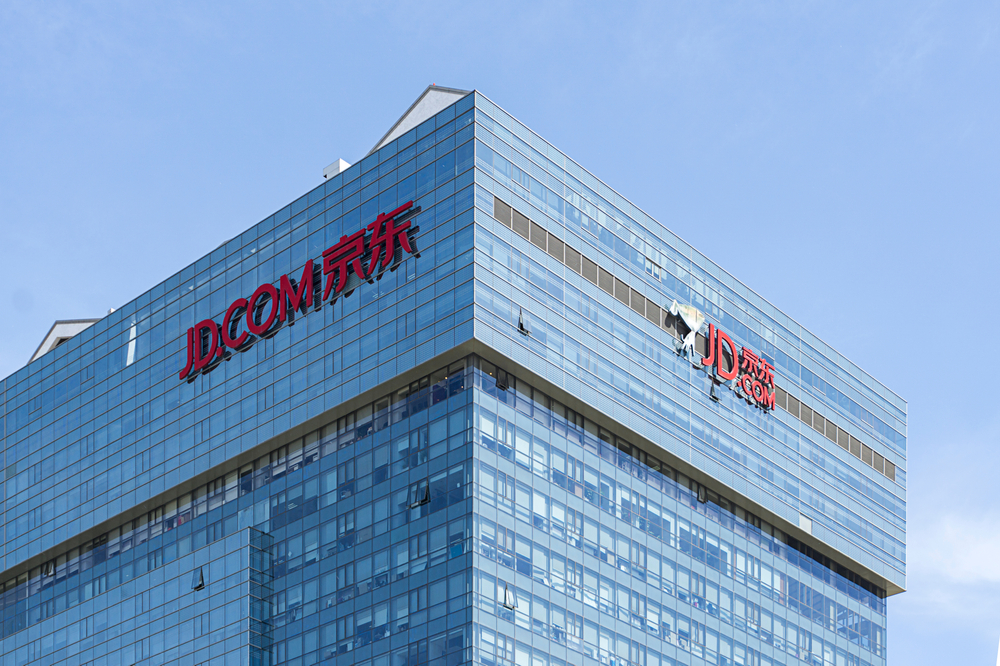
JD.com: Revenue Growth Accelerates, but Weaker Profits Raise New Questions
At first glance, JD.com’s latest results appear to be proof of the stability and resilience of one of China’s largest tech companies. However, the deeper an investor delves into the published figures and the broader context of the company, the more it becomes clear that beneath the surface of growth lies tension that could determine the future direction of the stock. Today, the market is no longer looking merely for proof that the company can still sell. It is primarily watching to see whether it can maintain the quality of its growth, cost discipline, and a compelling profit profile in an increasingly competitive environment.
About the company
JD.com is a Chinese technology and e-commerce company headquartered in Beijing, traded on the Nasdaq under the ticker JD and in Hong Kong under the symbol 9618. The company positions itself as a provider of supply chain technologies and services, and its business is built on online merchandise sales, logistics, and digital services for both merchants and brands. In recent years, JD.com has been striving to strengthen its position not only in traditional online retail but also in new segments; according to the Wall Street Journal, it is also addressing the costs associated with its expansion into food delivery, where it is working to limit losses and improve profitability.[1]
Revenue exceeded consensus and grew by nearly 5%
JD.com reported net revenue of RMB 315.7 billion for the first quarter of 2026, which translates to $45.8 billion and represents year-over-year growth of 4.9% compared to the same period last year. Sales of physical goods rose by 1.0%, while net service revenue posted more significant growth of 20.6% year-over-year. The momentum in service revenue is a key indicator, as it shows that JD.com is gradually diversifying its revenue streams, with an increasing share of growth coming not from merchandise sales themselves, but from paid services for sellers, third-party logistics, and other platform products.[2]
Profits Under Pressure from Costs and Strategic Investments
Despite revenue growth, profitability results painted a mixed picture. Diluted earnings per ADS reached RMB 3.54, or $0.51, compared to RMB 7.19 in the same quarter last year. Non-GAAP diluted earnings per ADS were RMB 5.12, or $0.74, compared to RMB 8.41 in the first quarter of 2025. According to the report, the decline was primarily driven by increased strategic investments in new business initiatives, including JD Food Delivery and expansion into European markets via the Joybuy platform. Total costs of sales rose by 3.7%, and marketing expenses jumped by 45.8% year-over-year, clearly indicating that JD.com is currently prioritizing growth and market share over short-term profit optimization.2
JD Retail Holds Steady with a 5.6% Operating Margin
While the company’s overall results reflect the investment burden from new segments, the core JD Retail business maintained solid operating performance. The segment reported operating revenue of RMB 15.0 billion and an operating margin of 5.6% for the first quarter of 2026, up from 4.9% in the same period last year. This margin improvement in the core business is an important positive signal for investors, as it shows that the retail engine itself is operating more healthily than a year ago and that losses stem exclusively from deliberately funded new initiatives, not from a weakening of the main platform.2
Free cash flow has plummeted, raising questions about cash flow
One of the most striking figures in the entire report is the free cash flow for the first quarter of 2026. The company reported a negative free cash flow of RMB 6.481 billion, which represents a negative $940 million, compared to a negative cash flow of RMB 21.603 billion in the same quarter last year. Although this is a significant improvement year-over-year, it remains a negative figure, and capital expenditures on real estate development of RMB 3.466 billion, along with other investment expenditures, indicate that the company continues to invest heavily in physical infrastructure.2
Share buybacks and European expansion signal a long-term strategy
Despite investment pressures, the company repurchased its own shares in the first quarter of 2026 for a total of $631 million, representing 1.6% of shares outstanding as of December 31, 2025. In addition, it paid an annual dividend. On March 16, 2026, JD.com officially launched its European online retail platform, Joybuy, which currently operates in the United Kingdom, Germany, the Netherlands, France, Belgium, and Luxembourg, offering customers its own delivery services via JoyExpress. It is precisely this combination of active share buybacks and geographic expansion into Europe that reflects the fact that, despite short-term pressure on profitability, management remains confident in the long-term growth trend and the company’s ability to create value for shareholders.2
Conclusion
Following its first-quarter 2026 results, JD.com has reached a point where the market will no longer evaluate just revenue growth alone, but primarily whether the company can translate this growth into more convincing profitability. While the company increased revenue by 4.9% to $45.79 billion and exceeded market expectations on the revenue front, earnings per share of $0.37 fell short of the consensus estimate of $0.57, indicating that pressure on margins remains a significant concern. That is precisely why investors will be watching closely in the coming quarters for the quality of growth, cost discipline, and management’s ability to stabilize new initiatives, including segments that are currently weighing on overall profitability. If JD.com manages to sustain sales growth, improve business returns, and simultaneously limit losses in newer areas, today’s mixed results may ultimately be seen as a temporary phase rather than a warning sign of the company’s weakening.
O.Z.I. Online Zone Investment Opportunities (OZIOS) is a registered trademark of APME FX TRADING EUROPE LTD, a Cyprus Investment Firm (CIF) controlled and regulated by the Cyprus Securities and Exchange Commission (CySEC) under CIF license number 335/17, with a registered address at Lophitis Business Center, Office 404, 4th Floor, 28 October Ave 249, Limassol 3035, Cyprus. Contracts for difference (CFDs) are complex instruments and come with a high risk of rapid financial loss due to leverage. 81.54% of retail investor accounts lose money when trading CFDs with this provider. You should consider whether you understand how CFDs work and whether you can afford to take the high risk of losing your money.
[1] https://en.wikipedia.org/wiki/JD.com
[2] https://files.quartr.com/reports/ca85c-2026-05-12-10-42-01.pdf?ref=TWFya2V0QmVhdCBNZWRpYSBMTEM=