Warning on risks: Financial contracts for difference are complex instruments and are associated with a high risk of rapid financial losses due to leverage. On 77.44% of retail investor accounts, financial losses occur when trading financial contracts for difference with this provider. You should consider whether you understand how financial contracts for difference work, and whether you can afford to take the high risk of suffering financial losses. Please read the Risk Disclosures.

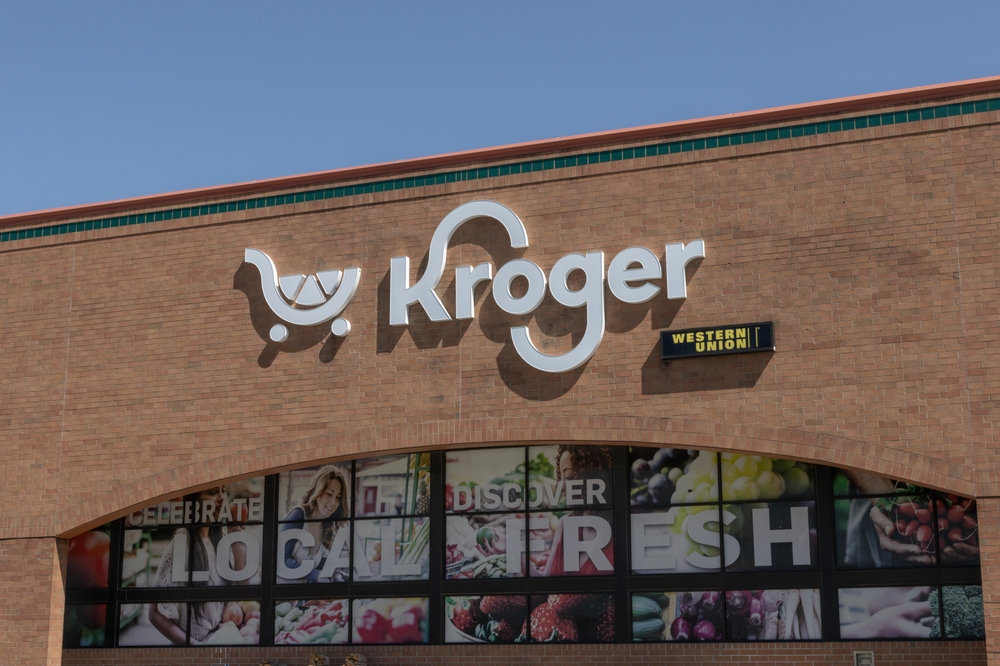
Kroger: Earnings Beat Expectations, but Weaker Sales Forced the Company to Lower Its Outlook
U.S. retail giant Kroger released its second-quarter 2026 results, which at first glance gave investors several reasons to be satisfied. A closer look at the numbers, however, reveals that behind the solid performance lie signs that could significantly impact the company’s future direction. At the same time, Kroger finds itself in a period when consumer behavior is shifting and pressure on traditional retail remains high. The latest quarter therefore offers an interesting glimpse into whether the company can maintain its position even in a more challenging environment. [1]
About the company
The Kroger Co. is an American retail company headquartered in Cincinnati, Ohio. It is primarily engaged in the retail sale of groceries, the operation of supermarkets, pharmacies, gas stations, and e-commerce. It was founded in 1883 by Bernard Kroger and, over more than 140 years of operation, has grown to become one of the largest retailers in the United States. Today, Kroger employs approximately 400,000 people and serves more than 11 million customers daily. The company operates 2,688 supermarkets and multipurpose stores, 2,248 pharmacies, 1,740 gas stations, and 43 distribution centers. Through its retail brands, it operates in 35 U.S. states and the District of Columbia.
Earnings beat Wall Street expectations
Kroger entered the second quarter of 2026 with results that outperformed market expectations in terms of profitability. The company’s total revenue rose by approximately 2% year-over-year, from $33.94 billion to $34.62 billion. Kroger’s net income reached $641 million, compared to $609 million a year ago, and earnings per share rose from $0.91 to $1.05. Adjusted earnings per share looked even better at $1.09, up 5% year-over-year from $1.04 and exceeding analysts’ expectations of approximately $1.05. At the same time, operating income rose from $863 million to $971 million, representing a year-over-year improvement of approximately 13%. Kroger’s ability to maintain profit growth despite relatively weak sales growth demonstrates that cost savings and greater efficiency are, for now, offsetting the pressure the company is facing from consumer demand.
Sales revealed the biggest weakness
However, the positive profitability figures masked a significantly weaker performance in sales themselves. Comparable sales excluding fuel rose by only 0.2%, whereas in the same period last year they had grown by 3.4%. The result also fell short of market expectations by approximately 0.8%. Several factors negatively impacted sales. Changes related to the Inflation Reduction Act and lower drug prices shaved approximately 140 basis points off growth, and a cyclospora outbreak linked to fresh produce reduced growth by another 35 basis points or so. CEO Greg Foran also noted that while customers continue to visit stores and foot traffic increased during the quarter, they remain significantly more disciplined in their purchasing. Higher fuel prices and pressure on household budgets are thus creating an environment in which Kroger must fight for every additional purchase, and sales growth can no longer be taken for granted.2
Digital business is gaining momentum
One of Kroger’s strongest segments remains digital sales and the advertising business, which are gradually becoming more important to the company’s overall profitability. Adjusted e-commerce revenue in the second quarter rose 20% year-over-year, building on the 19% growth from the first quarter. Kroger’s Precision Marketing segment performed even more strongly, with earnings rising by 24%. These activities are important to the company not only in terms of revenue growth but also in terms of margins, as improving e-commerce profitability and growth in the media business were among the factors that supported the company’s gross margin. At the same time, Kroger continues to expand its private-label brands, whose share of sales increased by approximately 50 basis points during the quarter. Management also plans to significantly expand the affordable SmartWay brand, which is expected to grow gradually from approximately 130 products to approximately 1,000 products. Kroger is thus not relying solely on traditional grocery sales but is increasingly developing areas that may deliver higher growth and greater profitability in the future.24 [2]
Margins remain under control
An important aspect of the results was Kroger’s ability to maintain relatively stable margins despite a more challenging environment. The total gross margin reached 22.4% compared to 22.5% a year ago, while the FIFO gross margin, adjusted for fuel and other items, increased by 13 basis points year-over-year. Higher e-commerce profitability, growth in the advertising segment, a more favorable mix of sales at pharmacies, and procurement savings all had a positive impact. On the other hand, the company was weighed down by higher inventory losses, rising transportation costs, and investments in lower prices for customers. The ratio of operating, general, and administrative expenses rose by 33 basis points, primarily due to higher employee wages, healthcare costs, and weaker sales growth. Adjusted FIFO operating income therefore reached $1.076 billion, compared to $1.091 billion a year ago. Kroger now faces the challenge of continuing to invest in pricing and the customer experience without significantly damaging its profitability.2
The weaker outlook did not scare investors
The biggest change following the earnings report was a reduction in the expected growth of comparable sales, excluding fuel, for the full year 2026. Kroger had originally projected growth of 1% to 2%, but the new outlook calls for growth of only 0.2% to 0.8%. Despite the significant reduction in the sales outlook, management left its other key targets unchanged. Adjusted earnings per share are expected to reach between $5.10 and $5.30 for the full year, FIFO operating income between $5 billion and $5.2 billion, and free cash flow between $2.7 billion and $2.9 billion. Capital expenditures are expected to range from $3.8 billion to $4 billion. In addition, Kroger continues to return significant capital to shareholders. It increased its dividend by 11%, marking the 20th consecutive year of increases, and repurchased $1 billion in its own shares during the quarter. Since the beginning of the year, share repurchases have totaled $1.2 billion, and approximately $800 million remained in the $2 billion program at the end of the quarter. The market therefore reacted surprisingly calmly to the weaker sales outlook, with investors placing greater emphasis on the stable earnings outlook and the company’s ability to generate cash.2 [3]
Conclusion
Kroger is now at a point where its future growth will depend not only on its ability to increase sales, but primarily on how effectively it can manage margins, costs, and changing consumer behavior. Weaker comparable sales growth indicates that the environment remains challenging, but a stable earnings outlook, e-commerce growth, expansion in the advertising segment, and ongoing share buybacks demonstrate that the company still has several tools at its disposal to drive shareholder value. Kroger’s ability to maintain price competitiveness without significantly undermining profitability will also play an important role. If the company manages to restore stronger sales growth while continuing to improve efficiency, the current slowdown may be only a temporary phase on the path to more stable growth. [4]
[1,2,3,4] Forward-looking statements are based on assumptions and current expectations, which may be inaccurate, or on the current economic environment, which is subject to change. Such statements are not guarantees of future performance. They involve risks and other uncertainties that are difficult to predict. Actual results may differ materially from those expressed or implied in any forward-looking statements.
O.Z.I. Online Zone Investment Opportunities (OZIOS) is a registered trademark of APME FX TRADING EUROPE LTD, a Cyprus Investment Firm (CIF) supervised and regulated by the Cyprus Securities and Exchange Commission (CySEC) under CIF license number 335/17, with a registered address at Lophitis Business Center, Office 404, 4th Floor, 28 October Ave 249, Limassol 3035, Cyprus. Contracts for difference (CFDs) are complex instruments and carry a high risk of rapid financial loss due to leverage. 77.44% of retail investor accounts lose money when trading CFDs with this provider. You should consider whether you understand how CFDs work and whether you can afford to take the high risk of losing your money.
[1] https://en.wikipedia.org/wiki/Kroger
[3] https://www.reuters.com/business/retail-consumer/kroger-cuts-annual-sales-forecast-2026-09-11/