Warning on risks: Financial contracts for difference are complex instruments and are associated with a high risk of rapid financial losses due to leverage. On 77.44% of retail investor accounts, financial losses occur when trading financial contracts for difference with this provider. You should consider whether you understand how financial contracts for difference work, and whether you can afford to take the high risk of suffering financial losses. Please read the Risk Disclosures.

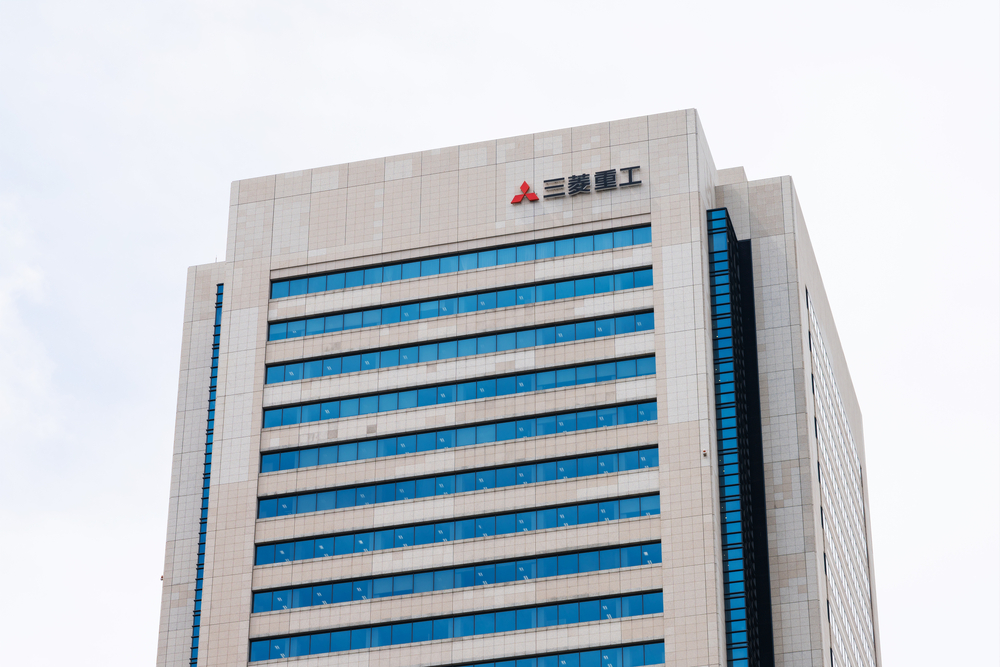
Mitsubishi Heavy Industries: Profit Rises 65% and Orders Exceed 2 Trillion JPY
Japanese industrial giant Mitsubishi Heavy Industries kicked off the new fiscal year with results that drew heightened market attention and raised questions about the strength of its current growth cycle. The company reported significant improvements in several key areas, benefiting primarily from growing demand in energy technologies, the defense sector, and the aerospace industry. The overall picture points to a period of accelerated activity and strengthening of core financial metrics that exceeded investor expectations.
About the company
Mitsubishi Heavy Industries is a Japanese industrial company headquartered in Tokyo. Its roots date back to 1884, and it was established in its current legal form in 1950. The company operates in the energy, industrial infrastructure, logistics, aviation, defense, and space technology sectors. Its portfolio includes gas and nuclear power plants, turbines, aircraft engines, rockets, military aircraft, ships, air conditioning systems, and industrial equipment. The group comprises 246 consolidated companies and, as of the end of March 2026, employed 78,793 people. For fiscal year 2025, it reported revenue of 4.97 trillion JPY and received orders worth 7.65 trillion JPY.[1]
A quarter that gained momentum across the board
The first quarter of fiscal year 2026 showed that Mitsubishi Heavy Industries’ growth is no longer driven solely by an increase in orders, but also by significantly improved profitability. The value of orders received reached 2.02 trillion JPY, a 26% increase year-over-year. Revenue rose 16% to 1.19 trillion JPY, while operating profit surged 65% to 159.6 billion JPY. Its operating margin increased from 9.4% to 13.4%, indicating that the company was able to translate rising revenues into even faster profit growth. EBITDA reached 190.3 billion JPY, up 52% year-over-year, with its margin rising to 15.9%. Net income attributable to shareholders nearly doubled to 134.6 billion JPY. Of the year-over-year increase in operating profit, higher sales and improved margins accounted for approximately 55 billion JPY, while favorable exchange rate movements added another 9 billion JPY.[2]
Energy takes the lead
The energy systems segment became the largest source of growth, receiving orders worth 1.36 trillion JPY in the first quarter. This represents an increase of 488 billion JPY compared to last year. Segment revenue rose by 27% to 536.3 billion JPY, and operating profit increased by 80% to 101.3 billion JPY. The energy segment’s profit margin thus rose from 13.3% to 18.9%. The main driver was combined-cycle gas power plants, where orders rose from 602.5 billion JPY to 930 billion JPY. Strong demand came primarily from North America and Asia. The nuclear power sector also recorded significant growth. Orders in this segment rose from 101.4 billion JPY to 155.5 billion JPY, and revenue increased from 53.7 billion JPY to 80.3 billion JPY. The energy sector’s results thus confirmed growing demand for stable sources of electricity, the modernization of energy infrastructure, and the maintenance of existing facilities.2
Order backlog exceeded 14 trillion JPY
A strong influx of new orders increased Mitsubishi Heavy Industries’ total order backlog to 14.10 trillion JPY. This represents an increase of 865.3 billion JPY since the end of the previous fiscal year. The largest share came from energy systems, which recorded outstanding orders worth 7.81 trillion JPY. The aerospace, defense, and space technology segment had an order volume of 3.90 trillion JPY, and the industrial equipment and infrastructure segment reached 2.29 trillion JPY. The high volume of contracted projects provides the company with better visibility into future revenues, but at the same time increases the importance of production capacity, cost control, and meeting deadlines. Positive developments were also evident in cash flow. Free cash flow rose from 64.3 billion JPY to 391.5 billion JPY, and operating cash flow reached 284.5 billion JPY. The company’s cash balance increased to 1.68 trillion JPY, while interest-bearing debt remained at 519.8 billion JPY. As a result, MHI had a net cash position of approximately 1.16 trillion JPY at the end of the quarter.2
Defense and industry expand growth drivers
Mitsubishi Heavy Industries’ results were not driven solely by the energy sector. The Aerospace, Defense, and Space Technologies segment increased revenue by 10% to 286 billion JPY and operating profit by 13% to 32.4 billion JPY. Although orders fell from 350.8 billion JPY to 120.9 billion JPY, this was due to a high base of comparison following major defense contracts secured last year. Work on existing projects continued, and management raised the segment’s full-year order outlook from 1.65 trillion JPY to 1.75 trillion JPY. The defense and aerospace business alone increased revenue to 216.3 billion JPY, while commercial aviation reached 69.7 billion JPY. Industrial Solutions also saw a significant improvement. Its revenue rose by 15% to 177.9 billion JPY, and profit increased from 4 billion JPY to 9.9 billion JPY. The segment’s profit margin thus rose from 2.6% to 5.6%.2
Outlook improves, profit target remains unchanged
Following a strong first quarter, Mitsubishi Heavy Industries raised its full-year outlook for orders received from 6.8 trillion JPY to 7 trillion JPY. The outlook for the energy segment rose from 3.45 trillion JPY to 3.55 trillion JPY, and the forecast for the aerospace, defense, and space technology segment increased from 1.65 trillion JPY to 1.75 trillion JPY. The company also doubled its expected free cash flow from 300 billion JPY to 600 billion JPY. However, the revenue outlook remained at 5.4 trillion JPY, and the operating profit target remained unchanged at 540 billion JPY. MHI continues to expect net income of 380 billion JPY and EBITDA of 660 billion JPY. After just the first quarter, the company has already achieved approximately 30% of its full-year operating profit target, 35% of its net income target, and 65% of its expected free cash flow. The decision not to raise the earnings outlook reflects management’s caution in assessing future developments in costs, exchange rates, and the execution of major projects. The full-year dividend is expected to increase from 25 JPY to 29 JPY per share.2 [1]
Conclusion
Mitsubishi Heavy Industries now stands at a point where its future growth is underpinned not only by a strong first quarter but also by record order volumes and demand in strategic sectors. The combination of energy systems, nuclear technologies, defense, aerospace, and industrial infrastructure creates a broad foundation for further growth in both revenue and profitability. The order backlog of 14.10 trillion JPY provides the company with high visibility into future revenues, while growth in margins and free cash flow demonstrates that MHI is capable of converting new orders into real financial value. If the company can successfully execute large projects, maintain cost control, and capitalize on the growing demand for stable energy sources and defense technologies, the Q1 2026 results may be just the beginning of the next phase of growth. [2]
[1,2] Forward-looking statements are based on assumptions and current expectations, which may be inaccurate, or on the current economic environment, which is subject to change. Such statements are not guarantees of future performance. They involve risks and other uncertainties that are difficult to predict. Actual results may differ materially from those expressed or implied in any forward-looking statements.
O.Z.I. Online Zone Investment Opportunities (OZIOS) is a registered trademark of APME FX TRADING EUROPE LTD, a Cyprus Investment Firm (CIF) supervised and regulated by the Cyprus Securities and Exchange Commission (CySEC) under CIF license number 335/17, with a registered address at Lophitis Business Center, Office 404, 4th Floor, 28 October Ave 249, Limassol 3035, Cyprus. Contracts for Difference (CFDs) are complex instruments and carry a high risk of rapid financial loss due to leverage. 77.44% of retail investor accounts lose money when trading CFDs with this provider. You should consider whether you understand how CFDs work and whether you can afford to take the high risk of losing your money.
[1] https://www.mhi.com/company/overview/profile
[2] https://www.mhi.com/finance/library/result/pdf/fy20261q/presentation.pdf