Warning on risks: Financial contracts for difference are complex instruments and are associated with a high risk of rapid financial losses due to leverage. On 77.44% of retail investor accounts, financial losses occur when trading financial contracts for difference with this provider. You should consider whether you understand how financial contracts for difference work, and whether you can afford to take the high risk of suffering financial losses. Please read the Risk Disclosures.

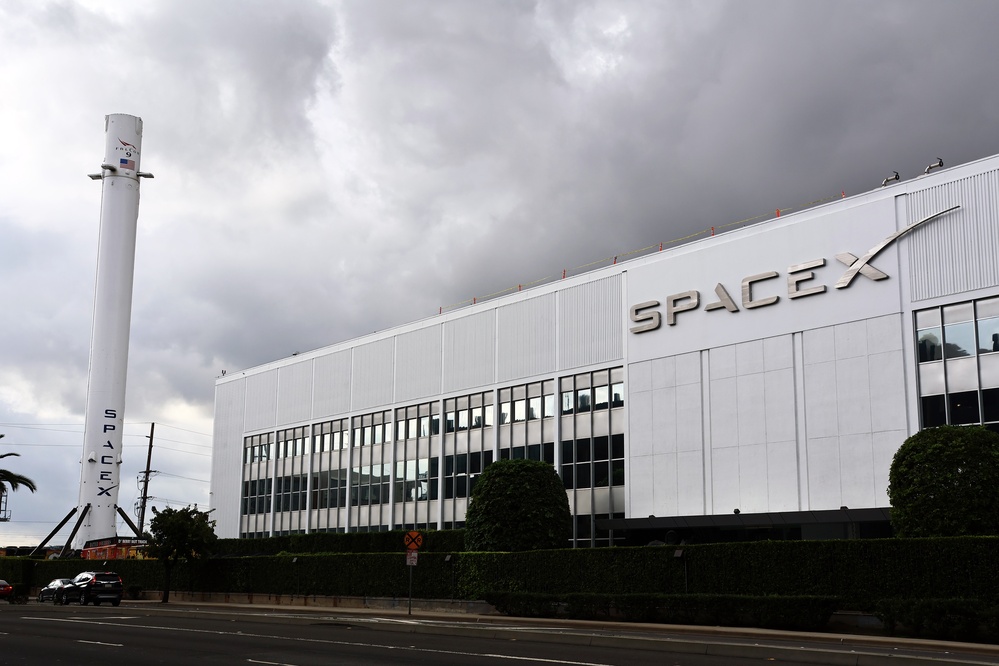
SpaceX: The Largest IPO in History Is Headed to Nasdaq on June 12, 2026
Capital markets are watching SpaceX with unusual anticipation in June 2026, as after years of speculation, the company is finally moving toward a moment that could rewrite the rules of the game. Investors today aren’t debating whether the IPO will happen, but rather what numbers and ambitions SpaceX will set for itself upon going public and whether it will be able to justify a valuation that could already rank it among the world’s most valuable public companies at its debut.
About the Company
Space Exploration Technologies Corp., known as SpaceX, is an American company headquartered in Texas, founded in 2002 by Elon Musk with the goal of significantly reducing the cost of access to space and paving the way for interplanetary flights. The company has built the Falcon 9 and Falcon Heavy launch vehicles and the Dragon spacecraft, and is developing the Starship system; by 2025, it had achieved approximately 165 orbital launches and confirmed its dominance in the commercial space sector. A key growth driver is the Starlink satellite network, which provides broadband connectivity via thousands of satellites in low Earth orbit. SpaceX is also a strategic partner of NASA and other government agencies, participating in resupplying the International Space Station, crewed flights, and defense projects, thereby building a stable contract base alongside Starlink’s dynamic growth.[1][2]
SpaceX: IPO Heading Toward $1.75 Trillion
The SpaceX IPO is shaping up to be the largest initial public offering in history, with the company aiming to raise approximately $75 billion at an offering price of around $135 per share, implying a valuation of approximately $1.75 to $1.8 trillion. According to available information, SpaceX plans to offer roughly 555 million shares, with the offering consisting primarily of a primary offering, from which capital flows directly into the company to finance further expansion in the areas of Starlink, rocket launchers, and AI infrastructure. Even during the preliminary bookbuilding phase, the IPO saw oversubscription, indicating strong demand from institutional investors, but also creating pressure on SpaceX to confirm the growth expectations embedded in this valuation in the coming years.[3] [1]
Starlink as the Core of the Investment Story
Starlink is now the main driver of SpaceX’s valuation, as what was originally a side project has become the dominant source of revenue and profits within the group. According to estimates and analytical reports, Starlink generated revenue of approximately $11 to $11.4 billion in 2025, accounting for more than 60% of SpaceX’s total revenue, and Starlink’s revenue is projected to grow toward $18 to $20 billion in 2026. The number of users exceeded 11 to 12 million across more than 150 countries worldwide by early 2026, and forecasts suggest that by the end of the year, Starlink could reach up to 20 million customers, which would confirm its transformation into a global telecommunications player. For SpaceX’s investment story, this means the company is no longer viewed merely as a rocket company, but as a combination of a dominant provider of orbital connectivity and an infrastructure player in the field of data and AI services.[4] [2]
Financial Profile and Growth Rate
Data from the IPO prospectus show that SpaceX generated approximately $18.7 billion in revenue in 2025, with a significant portion coming from Starlink and a growing number of commercial and government launches. At the same time, however, the company reports a cumulative loss of more than $40 billion and a net loss for the first quarter of 2026 of more than $4.2 billion, underscoring the capital-intensive nature of the business and aggressive investments in infrastructure and development. Analytical models based on discounted cash flows show that for the current valuation of nearly $1.75 trillion to be justifiable, SpaceX and Starlink must grow at a pace over the next decade that no comparably large company has achieved in the past, with revenues needing to multiply within a few years and margins stabilizing at levels typical of the most profitable technology and telecommunications firms.[5] [3]
The Hidden Leverage of AI and Space Infrastructure
In addition to Starlink and rocket launches, the market views SpaceX’s ambitions in the areas of data centers and computing infrastructure in space as a key hidden driver of the company’s future value. Strategic documents and communicated visions anticipate that the satellite network and upcoming platforms could provide computing power for AI systems and data services directly from orbital nodes in the coming years, with Starlink ensuring data transmission back to Earth. This concept creates a narrative in which SpaceX is not just a rocket and telecommunications company, but a potential global provider of critical infrastructure for AI and the cloud, which is one reason why the market can accept a valuation in the trillions of dollars, even though a large portion of these revenues is still only projected.[6]
What the SpaceX IPO Means for Investors
SpaceX’s planned IPO presents a test for capital markets regarding the extent to which investors are prepared to commit to a long-term narrative that combines high technological uncertainty, enormous capital requirements, and very ambitious growth projections. On the one hand, this is a company with a dominant position in commercial launches, a rapidly growing telecommunications business, and strategic contracts with government agencies, which already generates double-digit billion-dollar revenues. On the other hand, its valuation is set in such a way that, even at the time of its IPO, it already incorporates expectations of long-term dominance in the emerging infrastructure for global data and AI services; if Starlink’s growth or technological progress were to slow down, the price correction could be significant. For a long-term investor, the SpaceX IPO is thus not only an opportunity to participate in the largest stock offering in history, but also a decision regarding the extent to which they believe that the combination of rockets, satellite internet, and space AI infrastructure can realistically turn extreme expectations into cash flow over the next decade.
Conclusion
SpaceX stands today at a point where its valuation is no longer driven by current results and increasingly depends on whether it can transform its ambitions in the areas of Starlink, commercial launches, and space data infrastructure into a stable and rapidly growing cash flow that justifies a market capitalization of $1.75 trillion or more. The combination of a dominant share of commercial launches, with more than 80 % of the market, satellite internet, which already generates the majority of revenue today, and long-term plans for orbital AI platforms creates an investment narrative in which the $800 billion mark may, in hindsight, be merely a stepping stone on a much longer trajectory, yet at the same time also a test of investor patience if growth slows or projects fail to meet the most optimistic scenarios. [4]
[1,2,3,4] Forward-looking statements are based on assumptions and current expectations, which may be inaccurate, or on the current economic environment, which may change. Such statements are not guarantees of future performance. They involve risks and other uncertainties that are difficult to predict. Actual results may differ materially from those expressed or implied in any forward-looking statements.
O.Z.I. Online Zone Investment Opportunities (OZIOS) is a registered trademark of APME FX TRADING EUROPE LTD, a Cyprus Investment Firm (CIF) supervised and regulated by the Cyprus Securities and Exchange Commission (CySEC) under CIF license number 335/17, with a registered address at Lophitis Business Center, Office 404, 4th Floor, 28 October Ave 249, Limassol 3035, Cyprus. Contracts for difference (CFDs) are complex instruments and come with a high risk of rapid financial loss due to leverage. 81.54% of retail investor accounts lose money when trading CFDs with this provider. You should consider whether you understand how CFDs work and whether you can afford to take the high risk of losing your money.
[1] https://en.wikipedia.org/wiki/SpaceX
[2] https://www.space.com/space-exploration/private-spaceflight/spacex-shatters-its-rocket-launch-record-yet-again-167-orbital-flights-in-2025
[3] https://www.reuters.com/business/media-telecom/spacex-plans-raise-75-billion-ipo-135-per-share-source-says-2026-06-03/
[4] https://global.morningstar.com/en-ca/stocks/spacex-what-investors-need-know-about-its-enormous-upcoming-ipo
[5] https://fortune.com/2026/05/20/spacex-finally-files-ipo-prospectus-reveals-revenue-is-up-but-losses-are-too/
[6] https://www.useluminix.com/reports/company-overviews/spacex-company-overview-may-2026/source/1