Warning on risks: Financial contracts for difference are complex instruments and are associated with a high risk of rapid financial losses due to leverage. On 77.44% of retail investor accounts, financial losses occur when trading financial contracts for difference with this provider. You should consider whether you understand how financial contracts for difference work, and whether you can afford to take the high risk of suffering financial losses. Please read the Risk Disclosures.

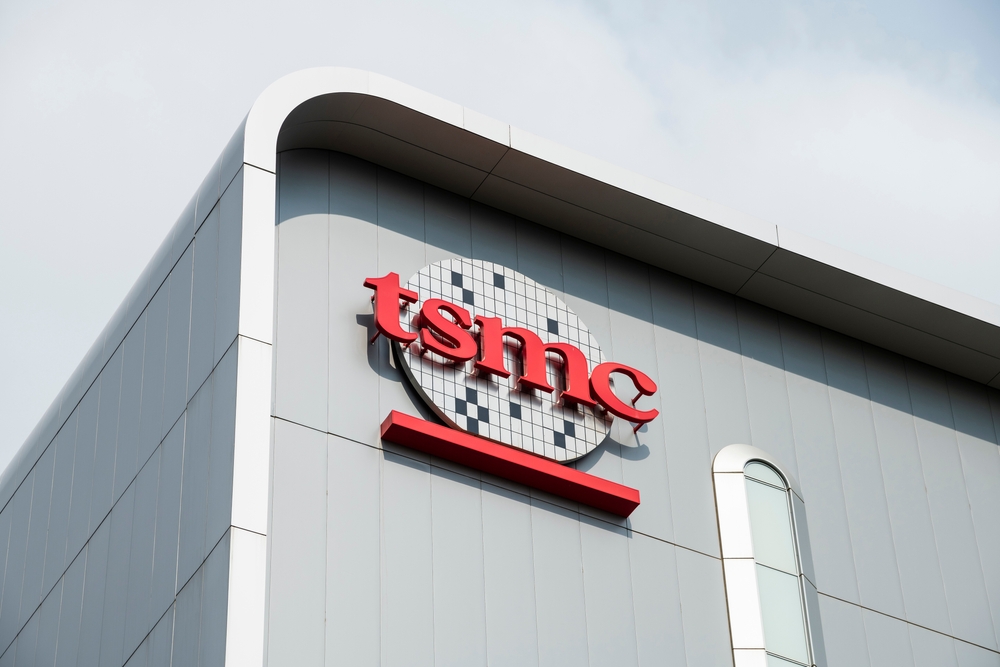
TSMC: Chip Giant Breaks Records with 58% Profit Growth Thanks to the AI Boom
Imagine a world where demand for artificial intelligence chips is changing the rules of the game across the entire tech industry. TSMC has just unveiled quarterly results confirming that the AI revolution is driving not just one company, but the entire global chip ecosystem. What does this mean for investors and markets at a time when Nvidia is experiencing skyrocketing stock growth and its leader is talking about orders in the billions? The ongoing wave of investment in AI continues, and TSMC is pushing the boundaries.
About the Company
Taiwan Semiconductor Manufacturing Company, known as TSMC, is a Taiwanese company headquartered in Hsinchu. It is the world’s largest contract semiconductor manufacturer, with a share of approximately 70% of the global market. Founded in 1987 by Morris Chang, the company has achieved dominance in the production of advanced chips using nanometer technologies such as 3nm or 2nm. Today, TSMC manufactures chips for key clients, including NVIDIA, Apple, AMD, and accounts for more than 60% of revenue in the high-performance computing and AI segment.[1]
TSMC is breaking records thanks to the AI boom
TSMC kicked off 2026 in a big way, and its first quarter confirmed that the chip giant has become a key part of the investment wave in artificial intelligence. The company not only exceeded analysts’ expectations but also demonstrated that demand for AI computing power is translating into unprecedented profitability and margins rarely seen in the semiconductor industry. Record profit growth of 58% alongside approximately 35% revenue growth underscores that TSMC can monetize demand for the most advanced processes ranging from 5nm to 3nm, which today form the core of AI infrastructure from data centers to specialized accelerators. The first months of the year have thus set the bar high, and investors will monitor further developments not only through the numbers themselves but especially through the signals TSMC sends regarding the future direction of the entire AI supercycle.[2]
Record Quarter and Pressure on Expectations
The first quarter of 2026 brought TSMC a net profit of approximately TWD 572.5 billion, marking a new all-time high for the company. Revenue reached roughly TWD 1.134 trillion, or approximately $36 billion, slightly exceeding market estimates, which had projected a level of around TWD 1.12 trillion. At the same time, profitability metrics improved significantly, with the gross margin rising to 66.2% from 62.3% in the previous quarter, while the operating margin moved to 58.1%, also exceeding market expectations. These figures cement TSMC’s position as a highly profitable infrastructure player, where a combination of scale and technological leadership enables it to convert demand for AI chips into robust cash flow and raises the bar for what investors will expect from the company in the coming quarters.[3] [1]
AI Demand as a Growth Engine
What has been presented for months as a thematic narrative about the AI boom is transforming into a concrete, measurable growth engine in TSMC’s numbers. The company confirmed that the strong quarter was driven primarily by demand for chips for high-performance AI infrastructure, with advanced 5nm and 3nm manufacturing processes accounting for more than 60% of revenue. Key customers such as Nvidia, Apple, and other hyperscalers are driving demand for cutting-edge chip production capacity, allowing TSMC to maintain high margins while gradually raising its long-term investment horizon. The company no longer operates merely as a supplier to individual players but as the central infrastructure hub of the entire AI ecosystem, converting the growing number of AI applications and models into a steady stream of orders. This shift increases market sensitivity to any signals from TSMC management regarding demand and makes the company’s quarterly results a key indicator of the health of the AI segment.2
TSMC is building a factory for the AI supercycle
Just as important as the quarter itself is the way TSMC sets its capital expenditures and outlook for the coming period, as this is where management’s confidence in the sustainability of the AI wave is revealed. The company announced that it plans capital expenditures of approximately $52 to $56 billion in 2026, representing a significant increase over the previous year and a historically unprecedented pace of investment in manufacturing capacity. Management also expects revenue in dollar terms to grow at a rate exceeding 30% for the full year, projecting revenue for the second quarter in the range of approximately $39 billion to $40.2 billion, significantly higher than in the same period last year. At the segment level, most capital is being directed toward the development of 2nm processes, which are intended to serve the next generation of AI accelerators and high-performance computing. TSMC is thus sending a clear signal that it views the AI boom not as a short-term bubble, but as a long-term supercycle on which it is prepared to bet tens of billions of dollars annually.[4] [2]
TSMC is the quiet winner of the AI rally
In the same week that TSMC reported a record quarter, Nvidia saw its stock price rise for ten consecutive days. This move comes shortly after the GTC conference, where CEO Jensen Huang spoke about Nvidia’s vision for revenue from GPUs and related products exceeding $1 trillion by 2027, representing a dramatic increase in ambitions in the areas of data centers and AI computing. For TSMC, this means that a key customer is publicly confirming a massive volume of future orders that must be translated into actual production capacity on advanced processes, further legitimizing TSMC’s aggressive capital plans. In this dynamic, TSMC is emerging as the quiet but systemic winner of the AI rally, standing behind the market capitalization growth of Nvidia and other players, because without its fabs, billions of dollars in GPU orders would remain merely at the presentation stage. For investors, this creates a narrative in which TSMC is not just a supplier, but the backbone of the entire AI economy.2[5]
Conclusion
TSMC stands at the center of the current AI investment wave as an infrastructure player that is shifting the narrative on artificial intelligence from the realm of software applications to the world of factories, lithography, and billions in capital expenditures. Record revenue and profit growth in the first quarter of 2026, coupled with an aggressive increase in capex and an ambitious full-year outlook with growth of around 30%, shows that the company’s management is not betting on short-term hype, but on a long-term supercycle of demand for computing power. At the same time, growing dependence on the AI segment and geopolitical tensions surrounding Taiwan are increasing TSMC’s risk profile, forcing markets to view the company not only as the engine of today’s growth but also as a strategic asset of the global economy. For investors, this means that every subsequent quarter for TSMC will not just be another earnings report, but also a test of the AI supercycle’s sustainability and an indicator of whether today’s valuations in the AI ecosystem are grounded in reality or are beginning to drift away from fundamentals. If TSMC can continue to scale capacity, maintain its technological lead, and manage geopolitical pressures, the current record-breaking quarter may be just the first of many milestones on a trajectory that will redefine what the value chain looks like in the era of artificial intelligence. [3]
[1,2,3] Forward-looking statements are based on assumptions and current expectations that may prove inaccurate, or on the current economic environment, which may change. Such statements do not constitute a guarantee of future performance. They involve risks and other uncertainties that are difficult to predict. Results may differ materially from those expressed or implied in any forward-looking statements.
O.Z.I. Online Zone Investment Opportunities (OZIOS) is a registered trademark of APME FX TRADING EUROPE LTD, a Cyprus Investment Firm (CIF) supervised and regulated by the Cyprus Securities and Exchange Commission (CySEC) under CIF license number 335/17, with a registered address at Lophitis Business Center, Office 404, 4th Floor, 28 October Ave 249, Limassol 3035, Cyprus. Contracts for difference (CFDs) are complex instruments and come with a high risk of rapid financial loss due to leverage. 76.44% of retail investor accounts lose money when trading CFDs with this provider. You should consider whether you understand how CFDs work and whether you can afford to take the high risk of losing your money.
[1] https://en.wikipedia.org/wiki/TSMC
[2] https://www.cnbc.com/2026/04/16/tsmc-q1-profit-58-percent-ai-chip-demand-record.html
[3] https://www.tradingkey.com/analysis/stocks/us-stocks/261789154-tsmc-q1-net-profit-soars-58-driven-by-ai-demand-tradingkey
[4] https://finance.yahoo.com/news/tsmc-lifts-2026-capex-outlook-154053660.html
[5] https://finance.yahoo.com/news/nvidia-stock-rises-10th-straight-140951038.html