Προειδοποίηση για τους κινδύνους: Τα χρηματοοικονομικά συμβόλαια επί διαφορών (CFD) είναι πολύπλοκα μέσα και συνδέονται με υψηλό κίνδυνο ταχείας χρηματοοικονομικής απώλειας λόγω μόχλευσης. Στο 77.44% των λογαριασμών ιδιωτών επενδυτών, προκύπτουν χρηματοοικονομικές απώλειες κατά τη διαπραγμάτευση CFD με αυτόν τον πάροχο. Θα πρέπει να εξετάσετε εάν κατανοείτε πώς λειτουργούν τα CFD και εάν μπορείτε να αντέξετε τον υψηλό κίνδυνο οικονομικών απωλειών. Παρακαλούμε διαβάστε τις Αποκαλύψεις Κινδύνων.

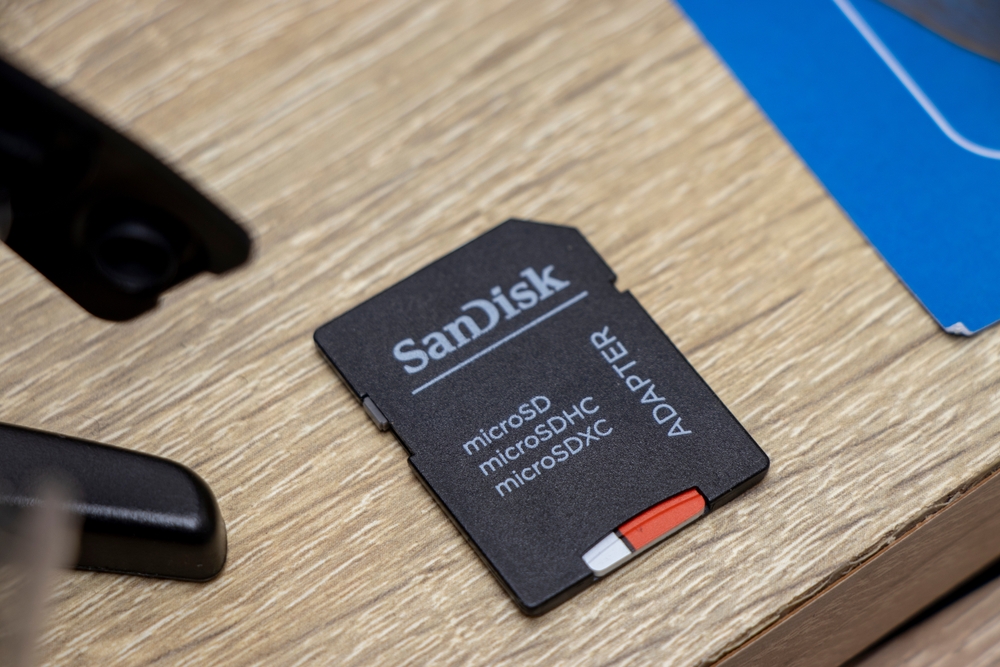
Sandisk: AI demand has propelled results and the company is strengthening its position for years ahead
Sandisk enters 2026 with a combination of factors that investors tend to reward the most. The company in the most recently published quarter achieved revenue of USD 3.025 billion, GAAP net income of USD 803 million, and datacenter revenue increased by 64% compared to the previous quarter. Management also guided the market for the next quarter with a revenue outlook from USD 4.40 billion to USD 4.80 billion, which supports the thesis that AI infrastructure and enterprise SSDs can be a long-term growth engine for Sandisk.[1]
About the company
Sandisk is an American multinational technology company headquartered in Milpitas, California, that designs and manufactures flash memory-based products, including memory cards, USB flash drives, and SSD drives. The company was founded on June 1, 1988, by Eli Harari, Sanjay Mehrotra, and Jack Yuan under the name SunDisk, and in 1991, it introduced the first flash SSD drive. In 1995, it was renamed to SanDisk and subsequently went public. In 2016, the company was acquired by Western Digital, and in 2025, the flash division was spun off as an independent publicly traded company under the name Sandisk.[2]
Record quarterly results and an outlook that raises the bar
Sandisk in the most recently published quarter showed a sharp acceleration of the business as well as profitability. Revenue reached USD 3.025 billion, which means growth of 31% compared to the previous quarter and growth of 61% year over year. GAAP gross margin jumped to 50.9% and GAAP operating profit reached USD 1.065 billion, while GAAP net income was USD 803 million and GAAP earnings per share were USD 5.15. Also notable is a shift in the revenue structure, as the datacenter segment reached USD 440 million and grew by 64% compared to the previous quarter, while the Edge segments also grew to USD 1.678 billion and Consumer to USD 907 million. Management also set strong expectations for the next quarter, targeting revenue of USD 4.40 billion to USD 4.80 billion and non-GAAP earnings per share of USD 12 to USD 14, which supports the narrative of continued growth in the era of AI storage.1
NAND pricing power supported by demand for QLC enterprise SSDs
A key positive element for Sandisk is an environment of rising NAND prices, which usually directly improves margins and earnings per share. TrendForce states that NAND contract prices in Q4 2025 were generally expected to rise on average by 5% to 10%, with SanDisk being the first to announce a 10% price increase. Demand was meanwhile shifting toward QLC enterprise SSDs, as CSP players quickly redirected orders in response to an HDD shortage and longer lead times. At the same time, the supply-demand balance improved thanks to production cuts and inventory clean-up in the first half of the year, which reduces pressure for discounts and creates room for a more stable pricing environment.[3]
Strategic securing of production with Kioxia through 2034
Sandisk strengthened one of the most important pillars of the investment story, which is production predictability and the availability of advanced 3D flash memory. Kioxia and Sandisk extended the agreement for the Yokkaichi plant until December 31, 2034, and aligned the Kitakami plant to the same date, thereby extending a cooperation lasting more than 25 years. Part of the renewed agreement is Sandisk’s commitment to pay USD 1.165 billion for manufacturing services and supply availability, with payments spread over the years 2026 to 2029. Kioxia also frames the NAND market as a space that is expected in 2026 to head toward a size of USD 150 billion, which supports the thesis that this is an infrastructure technology with long-term demand in the data economy.[4]
HBF with SK hynix and building a standard for AI inference
Sandisk is expanding the technology story beyond the traditional commodity memory cycle and is entering a layer that targets AI inference infrastructure directly. SK hynix and Sandisk announced that on February 25, 2026, at Sandisk headquarters in Milpitas, they carried out the kickoff for HBF standardization, while a joint workstream is being formed under the Open Compute Project. HBF is communicated as a new memory layer between HBM and SSD, whose goal is scalability and energy efficiency in an AI inference environment. The important investment significance is that the companies are not talking only about a product, but about creating an industry standard that is intended to expand the entire ecosystem and increase the chance of adoption in open data centers.[5]
Secondary offering without dilution and removal of selling pressure
Another positive catalyst is the gradual cleaning of the ownership structure after the separation from the former parent company. Sandisk, on February 18, 2026, announced the pricing of a secondary public offering of 5,821,135 shares owned by Western Digital, for USD 545 per share. Crucially, Sandisk is not selling any shares in this transaction and will receive no proceeds from it, which means it is not a dilution of existing shareholders. At the same time, a debt-for-equity exchange is described, in which the shares will be used in connection with debt held through an arrangement of entities, J.P. Morgan Securities and BofA Securities, which often signals to the market a gradual reduction in selling pressure and an increase in the free float.[6]
Conclusion
Sandisk stands at the intersection of two trends that dominate technology markets in 2026, namely the rapid growth of data infrastructure and the accelerating adoption of storage for artificial intelligence. The company no longer offers only a story about the memory cycle, because in the most recently published quarter, it demonstrated a step-change improvement in results, growth of the data center, and at the same time set an outlook that pushes market expectations significantly higher. The combination of a growing mix of enterprise SSDs, strong pricing discipline in the flash segment, and clearly communicated targets for the next quarter creates a framework in which Sandisk can continue rewriting its own profitability in further periods as well. If the company manages to maintain the pace of deployment in data centers and meet the revenue outlook of USD 4.40 billion to USD 4.80 billion, Sandisk remains one of the most direct public ways for an investor to gain exposure to the growth of AI storage and infrastructure. [1]
[1]Forward-looking statements are based on assumptions and current expectations that may be inaccurate, or on the current economic environment, which may change. Such statements are not a guarantee of future performance. They include risks and other uncertainties that are difficult to predict. Results may differ materially from the results expressed or implied in any forward-looking statements.
[1]https://www.sandisk.com/company/newsroom/press-releases/2026/2026-01-29-sandisk-reports-fiscal-second-quarter-2026-financial-results
[2]https://en.wikipedia.org/wiki/Sandisk
[3] https://www.trendforce.com/presscenter/news/20250925-12736.html
[4]https://www.kioxia.com/en-jp/about/news/2026/20260130-1.html
[5]https://news.skhynix.com/sk-hynix-and-sandisk-begin-global-standardization-ofnext-generation-memory-hbf/
[6]https://www.nasdaq.com/press-release/sandisk-announces-pricing-secondary-offering-common-stock-2026-02-18